
Table of Contents
Minga is a traditional concept associated with collective work, community cooperation, mutual support, and shared responsibility. The term is particularly connected with Andean and South American communities, where people have historically joined together to complete tasks that may be difficult for one person or one family to handle alone. Minga represents more than simply working in a group because it reflects a broader cultural idea based on cooperation, reciprocity, and community relationships.
The meaning of Minga can vary depending on the region, language, and context in which the word is used. In many traditional settings, Minga refers to communal labor in which neighbors, relatives, and other community members contribute their time and effort toward a shared objective. These activities have historically included farming, harvesting, repairing roads, maintaining shared spaces, and completing projects that benefit individuals or the wider community.
Understanding Minga requires more than learning a simple dictionary definition. Its history is connected with Indigenous traditions and the Quechua language, while its modern applications can appear in agricultural, cultural, environmental, educational, and community-development settings. Because of this broad background, Minga remains an interesting subject for people researching South American culture, Indigenous traditions, community cooperation, and collective work.
What Does Minga Mean?
The basic meaning of Minga is related to collective or communal work. Instead of completing a demanding task alone, members of a community come together and contribute their labor, skills, knowledge, or resources. The purpose is usually to accomplish something that has value for a household, a group of families, or an entire community.

Minga is often associated with reciprocity. A person may receive help from community members at one time and later provide assistance when someone else needs support. This creates a continuing relationship between individuals and helps build a network of mutual assistance.
For example, a farming family may need several people to help with harvesting. Rather than completing the entire task alone, the family can organize a communal work activity. Neighbors and relatives contribute their time, and the work can be completed more efficiently. At another time, those same participants may help another household with its agricultural responsibilities.
This example shows that Minga is not simply about dividing a task between workers. It can also strengthen social relationships and encourage people to recognize their responsibilities toward one another.
Historical Background of Minga
The history of Minga is strongly connected with Andean cultures and the Quechua language. The term is commonly associated with the Quechua word mink’a, which has been connected with communal assistance and reciprocal labor.
Traditional communities often depended on cooperation because individual households had limited resources. Agricultural work, construction, transportation, and maintenance could require more labor than a single family could provide. Collective work offered a practical solution.
Agriculture was one of the most important areas in which Minga developed. Planting and harvesting frequently needed to be completed during particular seasons or within specific periods. If a family did not have enough workers, community assistance could make an important difference.
People could gather together, complete the required work, and then continue supporting one another through similar activities. This created a system in which community relationships were connected with practical responsibilities.
Historical forms of Minga were not necessarily identical across every region. Different communities developed their own customs, expectations, and methods of organizing collective work. Nevertheless, the central idea of people cooperating for a shared purpose remained important.
Minga and Community Cooperation
Community cooperation is one of the most important characteristics of Minga. A traditional Minga allows individuals to combine their efforts instead of relying entirely on individual labor.
This approach can make physically demanding tasks easier. When several people contribute at the same time, work can often be completed more quickly and efficiently. However, the benefits are not limited to productivity.
Minga can create opportunities for communication and relationship building. People work together, exchange experiences, and develop stronger connections with other members of the community.
Different participants may also bring different skills. One person may understand farming techniques, another may know how to repair tools, and another may have experience organizing people. When these abilities are combined, the entire group can benefit.
This makes Minga an example of how community knowledge can be shared through practical participation.
Read more about: ecryptobit.com tokens
The Role of Reciprocity in Minga
Reciprocity is an important principle associated with Minga. It means that assistance is exchanged between members of a community over time.
The idea is different from a simple commercial transaction. Participants may not receive a fixed payment for every hour of work. Instead, the value of their contribution may be returned through future assistance, shared food, social relationships, resources, or other forms of community support.
Imagine that one household needs help preparing its agricultural land. Community members come together and provide assistance. Later, another household requires support with harvesting, and the first family participates in that activity.
Through repeated cooperation, people create a system of mutual support.
This reciprocal structure can also encourage trust. Community members understand that contributing today can help maintain relationships that may become valuable in the future.
Minga in Agriculture
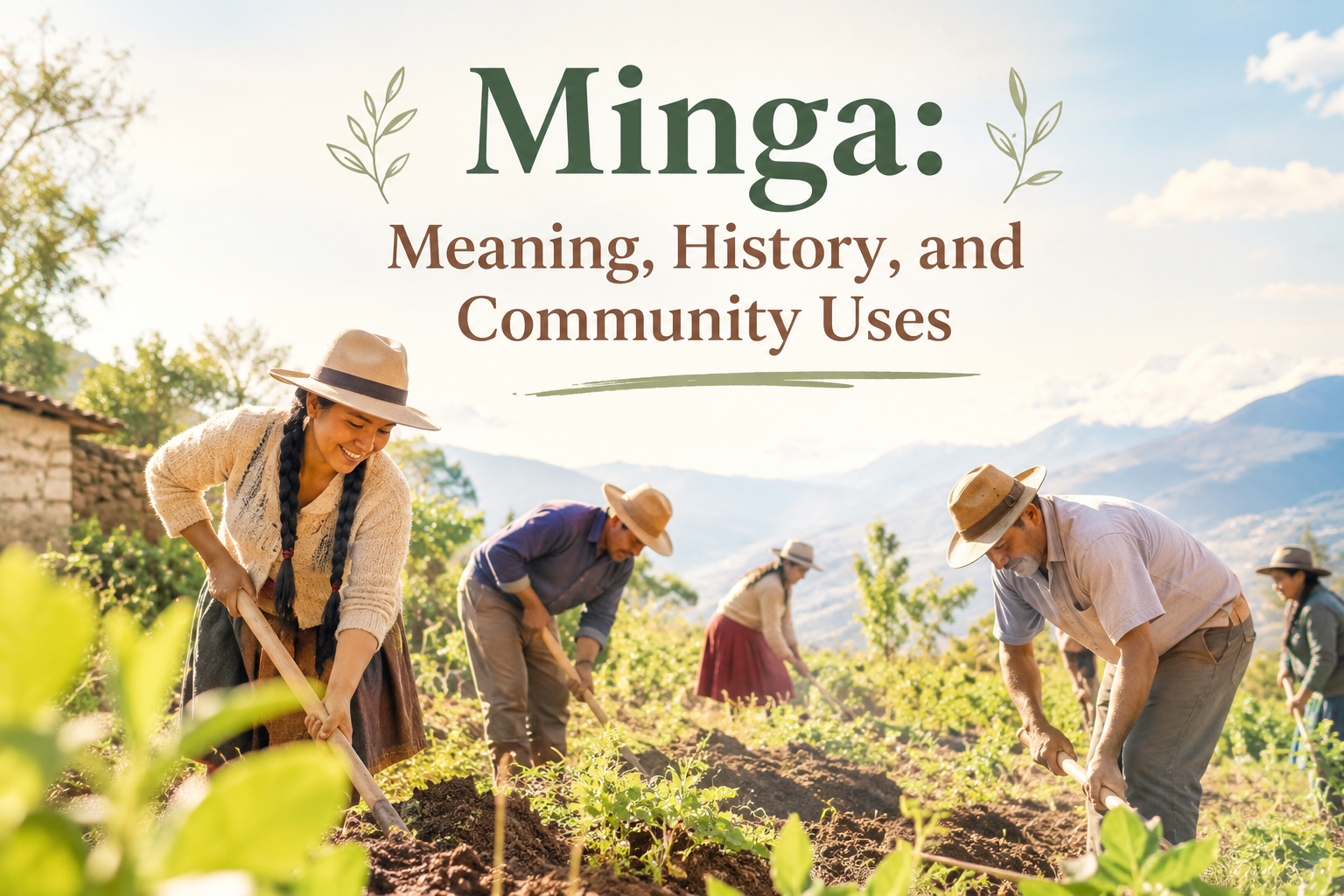
Agriculture has historically been one of the most important areas associated with Minga. Farming can require significant amounts of labor, particularly during planting and harvesting periods.
In traditional agricultural communities, several families could work together to complete seasonal tasks. This approach helped distribute the physical burden and allowed important work to be completed within the required time.
Minga could involve preparing fields, planting crops, harvesting agricultural products, transporting materials, or performing maintenance work.
Agricultural Minga also had a social dimension. People did not simply arrive, perform a task, and leave. Collective work could provide opportunities for conversation, shared meals, teaching, and strengthening relationships.
For communities where agriculture remains important, these activities can also connect present-day life with traditional cultural practices.
Minga and Community Construction
The concept of Minga can extend beyond agriculture into construction and infrastructure.
Communities may come together when they need to repair or create something that benefits several people. Roads, paths, community buildings, irrigation systems, public spaces, and other shared facilities can require more resources than one household can provide.
Collective labor can help address these needs.
For example, if a pathway becomes difficult to use after heavy weather, community members may organize a work activity to clear or repair it. Some participants may provide tools, while others contribute physical labor or organizational support.
The result is not only an improved facility but also an example of community participation.
When people personally contribute to a shared project, they can develop a stronger sense of connection to the place and to the people who live there.
Cultural Importance of Minga
Minga has cultural importance because it reflects values that have been maintained within different communities over generations. Cooperation, reciprocity, shared responsibility, and solidarity are among the ideas commonly associated with the tradition.
For Indigenous and rural communities, Minga can be more than an efficient method of completing difficult work. It can form part of cultural identity.
Community traditions often provide opportunities for younger generations to learn from older members. Through participation, young people can observe practical skills and understand how cooperation works within their community.
This process can help preserve knowledge that might otherwise become less common over time.
The cultural meaning of Minga can therefore extend beyond the physical task being completed. The activity can also represent continuity between generations.
Minga and Knowledge Sharing
Knowledge sharing is another important aspect of collective work.
When people from different generations and backgrounds participate in the same activity, they naturally exchange information. Experienced participants can demonstrate techniques, explain local practices, or provide advice to younger members.
For example, an experienced farmer might show younger participants how to prepare a particular crop. Someone with construction experience might teach others how to repair a traditional structure.
This type of learning is often informal. It happens through observation and participation rather than through a formal classroom.
Minga therefore provides an example of how communities can preserve practical knowledge through shared experiences.
Minga in Community Development
Modern community-development projects sometimes use ideas related to collective participation. People can work together to improve their surroundings, support local families, organize educational activities, or address shared problems.
The traditional concept of Minga provides an interesting framework for understanding this type of cooperation.
Community development can be more effective when local people participate in identifying problems and developing solutions. Residents understand their own environment and may know which issues require immediate attention.
A collective approach can allow people to contribute different forms of knowledge and experience.
However, modern community projects should not automatically be described as traditional Minga. The historical and cultural context of the term remains important.
Modern Uses of Minga
Minga continues to appear in modern cultural and community contexts. Different organizations and communities may use the term when discussing collaborative work, community participation, social activities, or collective projects.
Modern Minga-related activities may include environmental projects, agricultural cooperation, cultural programs, educational initiatives, and community improvement work.
Some organizations use the concept as part of their broader mission. For example, Minga Peru describes Minga as a Quechua concept associated with collaborative community work and incorporates the idea into its community-focused approach.
You can learn more about this modern use of the concept through Minga Peru.
The modern use of the word demonstrates how traditional concepts can continue to influence contemporary organizations. At the same time, each organization may interpret Minga according to its own goals and circumstances.
Minga and Environmental Activities
Environmental activities can provide another example of collective community effort.
People may cooperate to clean shared spaces, maintain local areas, protect natural resources, improve pathways, or support environmental awareness.
The principle behind these activities can resemble the cooperative spirit of Minga because participants contribute their time and energy toward something that benefits more than one individual.
For example, a community may organize a collective cleanup of an area that is used by many residents. Some people can collect waste, others can organize equipment, and others can coordinate transportation.
The project becomes successful because several people contribute to the same objective.
Still, it is useful to distinguish between the general idea of collective environmental work and the specific historical tradition of Minga.
Minga and Social Connection
One of the less visible benefits of Minga is its ability to strengthen social connections.
People can live close to one another without having strong relationships. Shared activities provide an opportunity to communicate, cooperate, and understand one another.
Minga creates a setting in which people are working toward a common objective while also interacting socially.
These relationships can become valuable beyond the original activity. Neighbors who have worked together may be more comfortable communicating when another community issue arises.
This demonstrates how practical cooperation can contribute to broader social connection.
Minga in the Digital Age
Technology has transformed the way communities communicate and organize activities. Today, people can use messaging applications, social networks, websites, and online groups to coordinate collective projects.
A local community could create an online group to announce an upcoming activity, explain what tools are needed, assign responsibilities, and share updates.
Although these digital tools are modern, the underlying idea of organizing people around a shared objective can be similar to the cooperative principle associated with Minga.
However, digital organization does not replace the cultural history of traditional Minga. The technology may make coordination easier, but the meaning of the original tradition remains connected with particular communities and historical practices.
Different Meanings of Minga
It is important to understand that Minga does not have exactly one meaning everywhere.
In discussions about Andean culture, Indigenous communities, agriculture, and communal work, Minga generally refers to collective labor or community cooperation. However, in some Spanish-speaking contexts, the word can have different informal or slang meanings.
This makes context extremely important.
If someone encounters the word Minga online, they should examine the surrounding text before assuming what it means. A discussion about South American culture is likely using the term differently from an informal conversation in another Spanish-speaking setting.
Understanding this distinction can prevent confusion and provide a more accurate interpretation.
Minga and Collective Responsibility
Collective responsibility is another idea connected with Minga. When people participate in a shared activity, they recognize that the outcome can affect the wider community.
This can encourage people to think beyond individual needs.
For example, maintaining a shared road benefits many households. Cleaning a community area improves the environment for everyone. Helping another family during an important agricultural period can strengthen the wider network of relationships.
The principle is simple: community members can contribute to outcomes that they may not be able to achieve individually.
This concept remains relevant in many societies even though the traditional form of Minga belongs to specific cultural contexts.
Why Minga Remains Relevant Today
remains relevant because cooperation is still important in modern communities. People continue to face challenges that require shared resources, knowledge, and effort.
Environmental concerns, community infrastructure, agricultural needs, cultural preservation, and social projects can all involve collective participation.
The tradition also provides an example of how communities can build relationships through action rather than communication alone.
reminds us that cooperation is not only about completing a task. It can also involve trust, responsibility, knowledge exchange, and cultural continuity.
Minga and Individual Work
Individual and collective work both have important roles. Some tasks require specialized personal attention, while others are more suitable for group participation.
represents a situation in which collective work can provide practical advantages.
Instead of expecting one household to handle a demanding task alone, a community can combine the available labor of several participants.
This does not mean that collective work is always the best solution. Rather, demonstrates how communities can identify situations in which cooperation can make a meaningful difference.
The flexibility of the concept is one reason similar ideas can continue to appear in modern community activities.
The Broader Significance of Minga
When considered as a whole, can be understood through several connected themes. These include cooperation, reciprocity, mutual assistance, community participation, cultural identity, and shared responsibility.
Its agricultural history shows how collective labor can solve practical problems. Its cultural importance demonstrates how traditions can preserve community values. Its modern applications show that the basic principle of cooperation can adapt to changing circumstances.
For researchers and readers interested in Indigenous traditions, South American history, agriculture, community development, or cultural studies, offers an informative example of collective social organization.
Final Thoughts
is much more than a simple word describing people working together. It represents a long-standing tradition connected with communal labor, reciprocity, cooperation, and community relationships.
Its roots are closely associated with Andean and Quechua cultural traditions, where collective work helped communities manage agricultural tasks and other demanding activities. Over time, the concept has appeared in different forms, including community infrastructure projects, cultural activities, social initiatives, and collective discussions.
The continuing relevance of demonstrates that cooperation remains an important part of community life. People can combine their labor, skills, knowledge, and resources to achieve goals that may be difficult for individuals to accomplish alone.
At the same time, should always be understood within its cultural and historical context. The meaning of the word can differ between regions, and modern uses are not necessarily identical to traditional practices.
Overall, provides a valuable example of how collective action can support practical needs while also strengthening social relationships and cultural continuity. Whether viewed through the lens of agriculture, community development, Indigenous traditions, or modern social initiatives, Minga remains an important concept for understanding the power of cooperation.