
Table of Contents
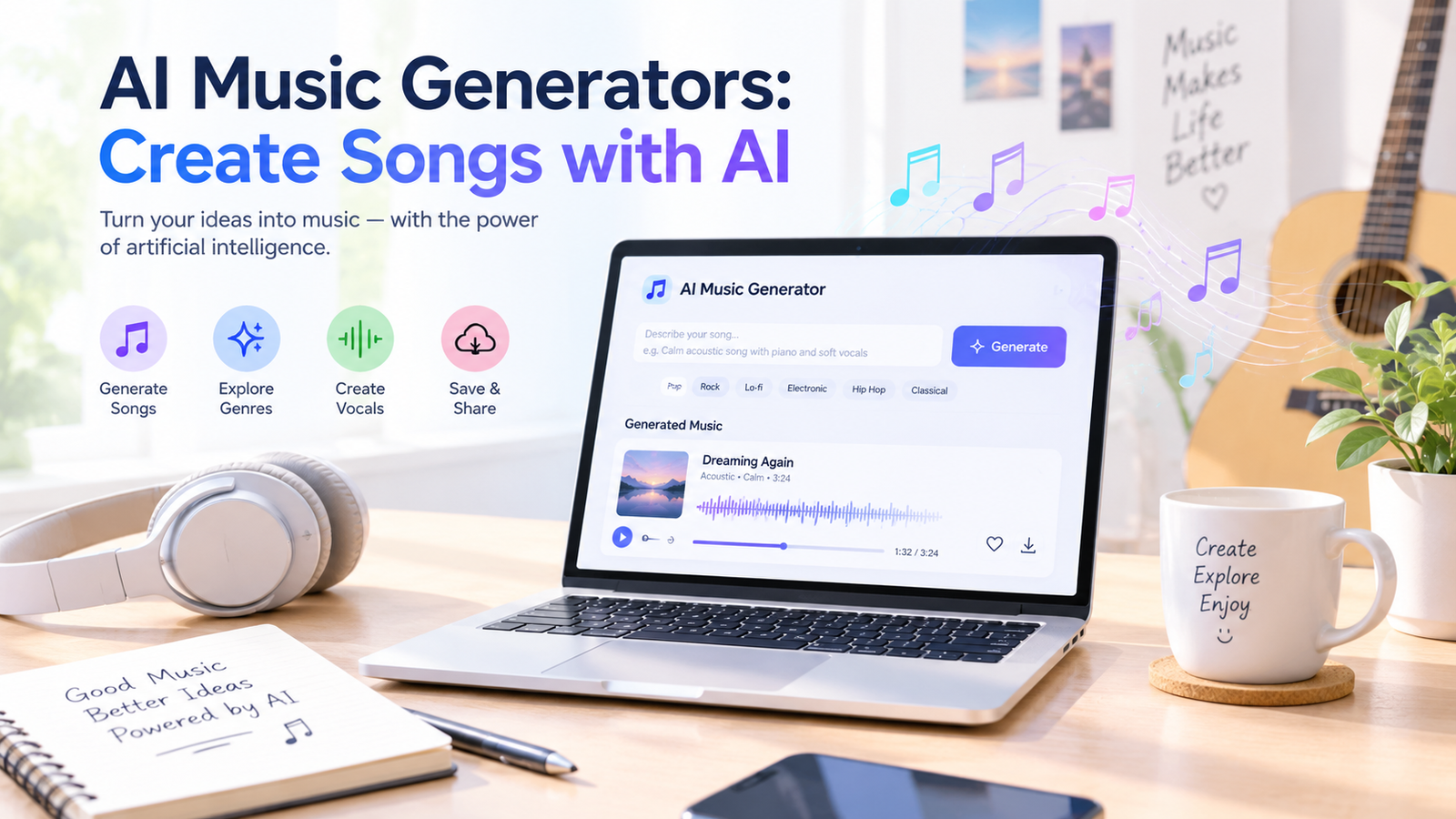
AI Music Generators in 2026 are changing how people create, produce, and experience music. In the past, making a song usually required musical instruments, recording equipment, songwriting skills, and considerable time. Today, artificial intelligence allows beginners, content creators, musicians, and businesses to explore music creation through simple text prompts and digital tools. Users can describe a musical idea, select a preferred genre, and generate a song with vocals or instrumental sounds, depending on the platform.
The growing popularity of AI Music Generators reflects a wider change in creative technology. These tools can help people experiment with different sounds, develop musical ideas, and produce background tracks for videos, podcasts, presentations, and other projects. However, AI-generated music also raises important questions about originality, copyright, quality, and the role of human creativity. Understanding these issues helps users make better decisions when choosing an AI music generator in 2026.
What Are AI Music Generators?
AI Music Generators are software tools that use artificial intelligence models to create music from written instructions, musical inputs, or other information. Depending on the platform, users may generate melodies, rhythms, instrumental compositions, complete songs, and even artificial singing voices.
For example, someone might enter a prompt describing a relaxing acoustic song with gentle guitar, soft vocals, and a peaceful atmosphere. The AI music generator interprets the request and produces an audio result that attempts to match the description. Another user could request energetic electronic music with powerful drums and a futuristic sound.

These systems do more than select existing songs from a database. They use patterns learned during training to generate new audio sequences. Their capabilities differ considerably, so one platform might specialize in complete songs while another focuses on instrumental music, sound effects, or assistance with music production.
AI music technology is useful because it makes experimentation easier. People without formal musical training can explore creative ideas, while experienced musicians can use generated audio as a starting point for more developed compositions.
How AI Music Generators Work
AI music generators rely on machine learning models trained to recognize relationships between musical elements. Depending on the system, these elements can include melody, rhythm, harmony, instrumentation, vocal characteristics, musical structure, and production styles.
During training, a model learns statistical patterns from its training material. When a user submits a prompt, the system processes the instructions and generates audio based on the patterns and capabilities it has learned. Some systems also use reference audio, uploaded recordings, lyrics, or other inputs to guide the output.
The process generally begins with an idea. A user describes the desired mood, genre, tempo, instruments, or vocal style. The platform then generates a musical result, which the user can listen to and evaluate. Some services offer options to regenerate sections, extend a composition, change lyrics, or create alternative versions.
The quality of the result depends on several factors, including the model, the instructions, and the platform’s available controls. A detailed prompt can help communicate a creative direction, but it cannot guarantee a perfect result. Users may need several attempts before producing music that suits their needs.
AI Music Generators therefore work best when users treat the first result as a draft rather than a finished masterpiece. Careful listening, editing, and creative judgment remain important parts of the process.
Important Features of AI Music Generators in 2026
Modern AI music tools provide different features depending on their purpose. One common capability is text-to-music generation, which converts written descriptions into audio. This allows users to explore musical ideas without first creating a traditional composition.
Another feature is AI songwriting assistance. Some platforms help users develop lyrics, melodies, or song structures. These features can be useful when a writer has a general idea but needs help developing it into a complete musical concept.
Vocal generation is another important development. Certain AI music generators can produce synthetic singing voices and combine them with instrumental arrangements. Results vary in pronunciation, emotional expression, and realism, so users should listen carefully before publishing generated tracks.
Instrumental generation is valuable for people who need background music without vocals. Creators can explore calm piano arrangements, cinematic soundscapes, electronic beats, and other styles for different types of content.
Some tools also support music extension, variations, or editing. These features can help users develop a short musical idea into a longer arrangement. However, available editing options, export formats, audio quality, and usage rights depend on the specific service and subscription plan.
Popular AI Music Generators to Explore
Several platforms have helped introduce AI-powered music creation to a wider audience. Their features, pricing, commercial permissions, and output quality can change, so users should check the latest official information before choosing a service.
Suno is a widely recognized AI music platform that allows users to create songs from descriptions and explore different musical styles. Depending on the available features, users can experiment with vocals, lyrics, and complete musical arrangements. It can be useful for beginners who want to turn an idea into a song without learning a traditional recording process first.
Udio is another AI music platform associated with generating songs from creative prompts. Users interested in exploring different genres, musical arrangements, and vocal approaches may find it worth investigating. Its current capabilities and usage conditions should be checked directly before starting a project.
Other music production applications incorporate AI-assisted features for composition, arrangement, audio processing, and creative experimentation. These tools may be more suitable for experienced musicians who want greater control over the final result rather than relying entirely on automatic generation.
The best AI music generator depends on the user’s goal. Someone making a quick background track may prefer simplicity, while a songwriter may prioritize control over lyrics and musical structure. Comparing real outputs and checking licensing conditions is more useful than choosing a platform based only on popularity.
How to Create Songs with Artificial Intelligence
Creating a song with artificial intelligence begins with a clear musical idea. Before opening an AI music generator, consider the purpose of the song, its intended audience, and the emotions it should communicate. A track for a travel video will probably require a different atmosphere from music intended for a dramatic film scene.
Next, write a descriptive prompt. Include the musical genre, mood, tempo, instruments, vocal preferences, and intended style of arrangement. For example, a prompt could describe gentle acoustic guitar, warm piano, a relaxed rhythm, and an uplifting atmosphere for a travel video.
If the platform supports lyrics, prepare original words or use its songwriting features to develop a draft. Review the lyrics before generating the complete song. Clear language, a consistent theme, and a recognizable structure can make the result more useful.
After generation, listen to the entire track. Check whether the vocals sound natural, the lyrics make sense, and the instrumental arrangement matches your expectations. If the result feels too energetic, too slow, or too crowded, adjust the prompt and generate another version.
Finally, consider editing the output. You might trim unnecessary sections, adjust volume levels, combine suitable segments, or use a digital audio workstation for further production. Before publishing or monetizing the song, verify that the platform’s terms permit your intended use.
Benefits of AI Music Generators
One major benefit of AI Music Generators is accessibility. Traditional music production can involve expensive equipment, specialist software, and years of practice. AI tools provide another starting point for people who want to explore music without immediately investing in a complete studio setup.
Speed is another advantage. A user can often generate a musical draft much faster than arranging every instrument manually. This can be helpful for brainstorming, testing ideas, and producing temporary tracks for creative projects.
AI music generation also encourages experimentation. Users can explore genres they do not usually compose, compare different arrangements, and discover unexpected combinations of sounds. For independent creators, this can open new creative directions.
These tools can support video producers, podcasters, educators, game developers, and small businesses that need music for specific purposes. For instance, a creator may experiment with a soft instrumental track for a tutorial or a suspenseful atmosphere for a short film.
However, faster production does not automatically mean better music. Human judgment remains essential for selecting the right composition, improving its emotional impact, and ensuring that it meets the needs of its audience.
AI Music Generators for Content Creators
Content creators often need music that supports their message without distracting viewers. AI Music Generators can help them explore background tracks for educational videos, product demonstrations, travel content, podcasts, and social media projects.
A travel creator might generate cheerful instrumental music for a video about a new destination. A teacher could explore a simple musical introduction for an educational lesson. A small business might experiment with different musical moods for a promotional video.
The main advantage is flexibility. Instead of searching through a large music library, creators can describe the atmosphere they want and evaluate generated results. Nevertheless, the output should always be checked for quality and suitability.
Creators must also consider licensing. A song that can be generated or downloaded is not automatically cleared for every commercial purpose. Some platforms restrict free-plan usage, impose attribution requirements, or apply different conditions to paid subscriptions.
Before using generated music in monetized content, read the applicable terms and retain relevant records. This simple step can help prevent avoidable problems when publishing videos, advertisements, or other commercial material.
AI Music Generators and Human Creativity
The relationship between artificial intelligence and human creativity is one of the most interesting aspects of modern music technology. AI can generate melodies, suggest arrangements, and combine musical elements, but a successful song involves more than producing sound.
Human musicians bring personal experiences, cultural understanding, intention, and emotional judgment to their work. They decide which musical ideas communicate a message and which should be removed. These decisions can make a composition meaningful to its intended audience.
AI tools can support this process without replacing every creative decision. A songwriter might use an AI music generator to explore possible arrangements, then rewrite the lyrics, record new vocals, and revise the composition. A producer might generate a draft and use it to identify a direction for a professionally recorded track.
The most productive approach is often collaboration. Artificial intelligence can reduce repetitive work and help users explore possibilities, while human creators provide direction, originality, and critical judgment.
As AI music technology develops, creative skills such as editing, storytelling, arrangement, and thoughtful evaluation may become even more valuable.
Read more about: best hollywood movies to watch in 2026
Copyright and Legal Considerations
Copyright is an important issue for anyone using AI Music Generators. The legal status of generated music can depend on the country, the level of human creative contribution, the material used, and the platform’s terms.
Users should understand that ownership of a downloaded audio file and copyright protection are not necessarily the same thing. A platform may grant certain usage permissions without guaranteeing that the resulting song qualifies for copyright protection under applicable law.
For example, Suno explains that commercial-use permissions depend on the subscription and circumstances under which a song was created. It also distinguishes commercial-use rights from copyright protection. Users should review its current official guidance before distributing or monetizing generated music.
You should also avoid uploading recordings, lyrics, or samples unless you have the necessary rights and permission. Prompts requesting a close imitation of a recognizable artist can create additional ethical and legal concerns, particularly when the resulting work is used commercially.
For reliable background on content ownership, consult the relevant copyright authority in your jurisdiction. The rules can differ between countries, and no general article can determine the legal status of every AI-generated song.
Challenges and Limitations of AI Music Generators
Despite their advantages, AI Music Generators have limitations. Generated songs may contain awkward lyrics, unnatural vocal pronunciation, inconsistent rhythms, or sudden changes in musical style. Instrumental arrangements may also lack the subtle dynamics expected from experienced musicians.
Another challenge is control. A user might have a precise idea of how a chorus should sound but struggle to reproduce it consistently through text prompts. Some platforms provide editing features, while others offer less control over individual musical elements.
Originality is also worth considering. Because these systems learn patterns from training material, users should not assume that every generated result is entirely free from similarity concerns. A song should be reviewed carefully, especially if it resembles an existing recording or includes recognizable musical material.
Subscription costs and usage restrictions can create further difficulties. Some platforms limit generation credits, downloads, audio formats, or commercial permissions. Users should compare these conditions before committing to a paid plan.
Finally, generated music may require human editing before it is ready for professional use. AI can accelerate the creative process, but quality control, responsible publishing, and clear artistic direction remain necessary.
The Future of AI Music Generators
The future of AI Music Generators will likely involve more flexible creative controls, improved audio quality, and closer integration with existing music production software. These developments could make it easier to adjust arrangements, refine sections, and combine generated material with recordings made by human musicians.
Personalized music is another possible area of growth. Users may increasingly seek tracks tailored to particular moods, activities, audiences, or creative projects. Better editing interfaces could also help beginners understand how different musical decisions affect the final composition.
At the same time, the industry will need clearer approaches to copyright, licensing, consent, and the use of artists’ work in AI training. Musicians, technology companies, distributors, and policymakers will continue to influence how these systems are developed and used.
The direction of the industry is not determined by technology alone. Audience preferences, legal developments, creative communities, and business models will all affect how AI-generated music becomes part of everyday listening and professional production.
Conclusion
AI Music Generators in 2026 offer an accessible way to explore songwriting, instrumental composition, and digital music production. They can save time, support creative experiments, and help beginners turn ideas into musical drafts. However, quality, licensing, originality, and copyright still require careful attention. The best results come from combining AI capabilities with human creativity and responsible decision-making.