
Table of Contents
Artificial intelligence is changing how people create content, find information, and complete everyday tasks. From writing articles to generating images, AI tools are becoming useful for students, professionals, marketers, and creative individuals. However, getting helpful results from an AI system often depends on how instructions are written. This is where Promptseen becomes a relevant topic for people interested in AI prompts, prompt discovery, and smarter digital workflows.
Promptseen is a keyword associated with the growing interest in discovering, understanding, and using prompts for artificial intelligence tools. AI prompts are instructions or questions that tell an AI system what a user wants it to do. A clear prompt can help produce more accurate, relevant, and useful results. As AI technology develops, people increasingly look for ways to improve their prompts and make their interactions with AI more effective.
Understanding Promptseen can help users explore the wider world of prompt-based AI technology. Whether someone wants to write better content, create digital artwork, research a topic, or organize ideas, learning about prompts can make the process easier. It is important to note that specific features, ownership, and services associated with a website named Promptseen should be confirmed through its official information rather than assumed from the name alone.
What Is Promptseen?
Promptseen is a search term that may interest people looking for AI prompt resources, prompt inspiration, or information about prompt-related platforms. In the broader AI environment, prompts help users communicate their goals to artificial intelligence systems. These instructions can be short questions, detailed descriptions, creative ideas, or step-by-step requests.

The growing popularity of prompt-related resources reflects a simple need: users want better results without spending unnecessary time experimenting. For example, a person who wants an AI writing tool to create an article can provide the topic, audience, desired tone, structure, and length. The more clearly these requirements are explained, the easier it becomes for the AI system to understand the task.
Promptseen is therefore a useful keyword to explore within the context of AI prompts and digital productivity. People researching it should look for reliable information about the specific service they intend to use. They should also distinguish between general prompt-writing techniques and features that a particular platform actually provides.
How AI Prompts Work
AI prompts work as instructions that guide an artificial intelligence model toward a particular response. When a user enters a question or command, the model processes the supplied information and generates an answer based on its training and available context. The result depends on several factors, including the clarity of the prompt, the model’s capabilities, and the information included in the request.
A simple prompt might ask an AI tool to explain digital marketing. A more effective prompt could request an explanation for beginners, provide practical examples, and specify a particular word limit. This additional context helps define the expected result and reduces the chances of receiving an answer that is too broad.
People exploring Promptseen can benefit from understanding this process because prompt quality influences the usefulness of AI-generated content. A prompt should communicate the main objective, explain relevant requirements, and identify any limitations. Users should then review the response instead of assuming that every generated statement is correct.
Main Benefits of Promptseen-Related Resources
Better Content Creation
Content creation is one of the most common uses of AI prompts. Writers, bloggers, and digital marketers often need help developing ideas, organizing information, and preparing initial drafts. Well-designed prompts can make these activities faster and more manageable.
Promptseen-related searches may help users discover approaches to writing more effective instructions for content generation. A useful writing prompt can include the target audience, subject, tone, format, and purpose. These details encourage the AI system to produce content that better matches the user’s needs.
However, AI-generated writing still requires human review. Writers should check grammar, factual accuracy, originality, and relevance before publishing anything. Adding personal knowledge and useful examples can also make content more valuable to readers.
Improved Creativity
Creative work often begins with an idea, but turning that idea into something practical can be challenging. AI prompts can help users explore different concepts, imagine alternative scenarios, and develop fresh directions for projects.
For example, a designer might request several concepts for a modern website, while a storyteller might ask for different plot ideas. A marketer could explore campaign themes for a new product. These uses demonstrate how carefully written prompts can support brainstorming without replacing human judgment.
Promptseen is relevant to this wider interest in prompt discovery because users frequently seek inspiration before starting a project. The most useful approach is to treat generated suggestions as starting points and refine them according to the project’s goals.
Increased Productivity
Time management is another reason people use AI tools. Repetitive activities such as summarizing notes, drafting routine messages, organizing information, and preparing outlines can often be completed more efficiently with appropriate prompts.
A clear instruction can reduce the need for repeated corrections. Instead of asking an AI assistant to write a general summary, a user can specify the important points, preferred length, and intended audience. This approach creates a more focused result.
Promptseen-related research can introduce users to the importance of structured instructions. Still, productivity gains depend on the task, the quality of the AI tool, and the time required to verify the output.
Promptseen and Digital Marketing
Digital marketing requires consistent communication, creative planning, and an understanding of audience needs. AI prompts can assist marketers with keyword research ideas, campaign brainstorming, social media drafts, and content planning.
For instance, a marketer can ask an AI tool to suggest blog topics related to a particular subject. The user can then evaluate those suggestions, conduct independent research, and select ideas that match the audience’s interests. This combination of AI assistance and human evaluation is more reliable than publishing automatically generated material without review.
People exploring Promptseen may be interested in using prompt-based methods to improve marketing workflows. A carefully written prompt should explain the business objective, target audience, platform, and desired communication style. It should also avoid requesting unsupported claims or misleading promotional statements.
For SEO content, prompts can help organize headings and identify related concepts. Nevertheless, search visibility depends on many factors, including content usefulness, technical website health, competition, and overall site quality. Using AI prompts does not guarantee indexing or higher rankings.
Google explains its approach to helpful content and search fundamentals through its official resources at https://developers.google.com/search/docs/fundamentals/creating-helpful-content. Reviewing these guidelines can help publishers focus on useful, original information rather than content created solely to influence rankings.
Using Promptseen Concepts for Education
Students and teachers can also benefit from learning how AI prompts work. Students may use AI tools to understand difficult concepts, generate practice questions, or organize study notes. Teachers can explore ways to prepare lesson outlines, classroom activities, and explanations for different learning levels.
The effectiveness of these activities depends on how instructions are written. A student studying science might ask an AI assistant to explain a concept in simple language and provide three practical examples. This is more specific than requesting a general explanation.
Promptseen-related learning can encourage students to think carefully about the questions they ask. Instead of copying generated answers, students should compare information with textbooks, class materials, and reliable sources. This practice supports understanding and helps reduce the risk of learning incorrect information.
Students should also follow their schools’ rules concerning AI use. AI assistance can support learning, but submitting generated work as entirely independent work may violate academic policies.
Promptseen for AI Image Generation
AI image generation allows users to create visual concepts from written descriptions. These descriptions can specify the subject, setting, lighting, artistic style, composition, and mood. A detailed prompt gives the image generator more information about the desired result.
For example, someone creating a website banner might describe a bright workspace, natural lighting, modern equipment, and a clean composition. An artist could request a fantasy landscape with particular colors and atmospheric details. These instructions help guide the creative process.
Promptseen may appeal to users who want to understand prompt ideas and improve their descriptions for visual AI tools. The best results often come from experimenting with a few carefully selected details rather than adding unrelated instructions.
Users should also consider copyright, image ownership, and the rules of the platform they use. When generating images for commercial projects, checking the tool’s current terms is especially important. AI-generated visuals should be reviewed for unwanted text, unusual details, and other errors before publication.
How to Write Better AI Prompts
Writing an effective prompt starts with a clear goal. Before entering instructions, users should identify exactly what they want the AI system to produce. A specific objective makes it easier to evaluate whether the final answer meets expectations.
The next step is to provide relevant context. If the task involves writing, context may include the subject, audience, tone, and format. If the task involves research, users can specify the questions they want answered and request reliable supporting sources.
It is also useful to define limitations. A user might specify a maximum length, ask for beginner-friendly language, or explain which subjects should be excluded. These boundaries help prevent responses from becoming unnecessarily broad.
Promptseen users can apply another useful technique: refine prompts gradually. If the first response is too general, the user can request more detail, provide missing context, or clarify the desired format. Prompt improvement is often an iterative process rather than a single attempt.
Finally, users should evaluate the result. They should check whether the answer follows the instructions, contains accurate information, and addresses the original question. For important decisions, AI output should be compared with trustworthy sources or reviewed by a qualified professional.
Important Features to Look for in a Prompt Platform
Anyone researching Promptseen or a similar service should evaluate the platform using clear criteria. The first consideration is the quality and relevance of its information. A useful prompt resource should help visitors understand what prompts do and how they can be adapted to different tasks.
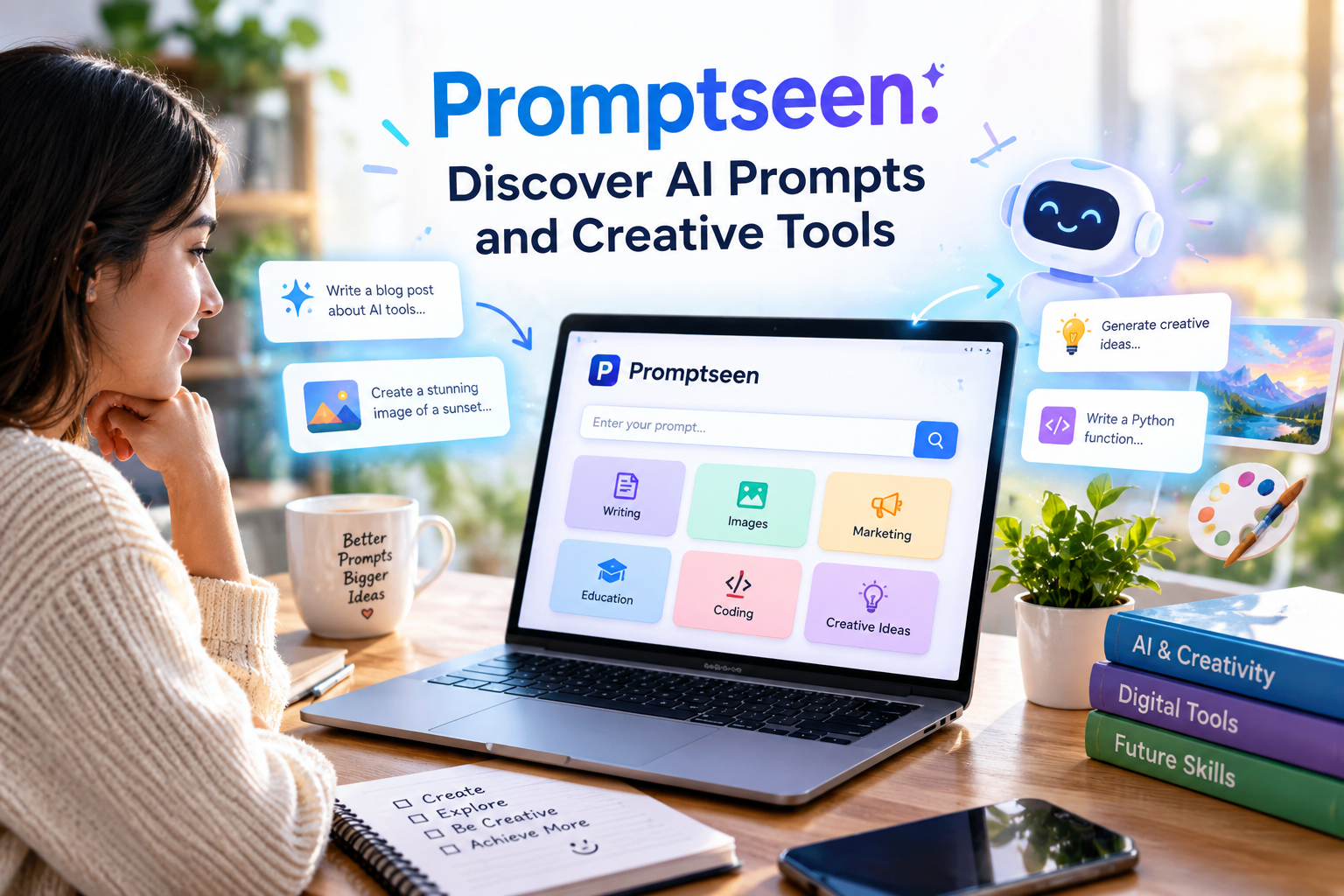
Organization is another important factor. Categories for writing, education, programming, marketing, and image generation can make prompt collections easier to navigate. Clear examples may also help beginners understand how instructions influence AI responses.
Search functionality can improve usability when a platform contains a large collection of prompts. Users should be able to identify relevant examples without wasting time browsing unrelated material. If a platform offers customization tools, the available options should be explained clearly.
Transparency is equally important. Visitors should be able to find information about the service, its terms, privacy practices, and any costs that may apply. These details should be verified directly because the name Promptseen alone does not establish which features are available.
Users should avoid assuming that every prompt platform offers advanced AI models, downloadable resources, free access, or account-based features. Such details require confirmation from the specific website’s official pages.
Read more about: AI technology trends 2026
Privacy and Safety Considerations
Privacy deserves attention whenever users interact with AI services. Some prompts may contain personal details, business information, private documents, or confidential ideas. Before submitting sensitive information, users should understand how the relevant platform handles and stores their data.
A sensible approach is to provide only the information necessary for the task. Personal identifiers, passwords, financial account details, and confidential records should not be entered into an unfamiliar AI service. Users should also review privacy policies and account settings where available.
People exploring Promptseen should verify the identity and trustworthiness of any website before creating an account or sharing information. They should check whether the domain uses a secure connection, whether contact details are available, and whether the service explains its data practices.
A secure connection alone does not prove that a website is trustworthy. Users should also be cautious of unexpected payment requests, misleading download buttons, suspicious browser notifications, and claims that sound unrealistic.
For general guidance on online security, the US Cybersecurity and Infrastructure Security Agency provides resources at https://www.cisa.gov/secure-our-world. These resources explain practical steps that help people protect their accounts and personal information.
Common Mistakes When Using AI Prompts
One common mistake is writing instructions that are too vague. A request such as “make something interesting” gives the AI system little direction. Adding a clear subject, intended audience, and desired outcome makes the task easier to understand.
Another mistake is including too many unrelated requirements in one prompt. Excessive or conflicting instructions can make the expected result unclear. Users should organize their requests logically and prioritize the most important details.
Some users also accept AI-generated information without checking it. AI systems can produce inaccurate statements, outdated details, or invented references. This is particularly important when working on educational, financial, technical, or health-related topics.
A further mistake is expecting identical results from every AI tool. Different models may interpret the same prompt differently because they have different capabilities and limitations. Users should adjust their instructions according to the task and the tool.
Finally, people should avoid copying prompts without considering their needs. A prompt designed for an image generator may not work well in a writing assistant. Understanding the purpose behind an instruction makes it easier to adapt it effectively.
The Future of Promptseen and Prompt-Based AI
The role of prompts is likely to remain important as artificial intelligence becomes part of more digital activities. AI systems are developing new ways to understand text, images, audio, and other forms of information. As these capabilities expand, users will continue to benefit from learning how to communicate their goals clearly.
Prompt libraries and educational resources may become more useful for people who want practical examples instead of starting every task from scratch. Beginners can learn from established prompt structures, while experienced users can develop specialized instructions for professional workflows.
Promptseen fits into the broader conversation about discovering and using AI prompts. Its specific future and capabilities depend on the actual service associated with the name, so users should rely on verified information rather than assumptions.
The most important skill will not simply be collecting prompts. It will be understanding how to adapt instructions, evaluate results, protect private information, and use AI responsibly. These abilities can help users benefit from new tools while maintaining control over their work.
Conclusion
Promptseen is a relevant keyword for people interested in AI prompts and digital productivity. Learning to write clear instructions can improve content creation, creativity, education, and everyday workflows. Users should verify platform-specific information, protect their privacy, and review AI-generated results carefully. With thoughtful use, prompt-based AI can become a practical tool for achieving better results.